
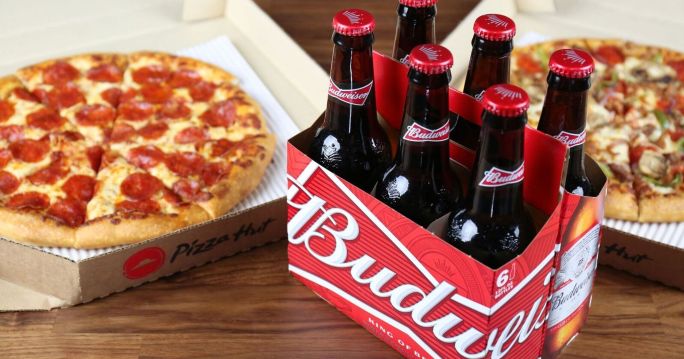
Pizza Hut recently announced that it will be expanding its beer delivery test to 300 locations across 7 states after a brief, yet successful test in 2017; and the plan is to continue to expand this beer delivery service to over 1000 restaurants by this summer. With beer delivery, Pizza Hut is becoming a pioneer for traditional pizza chains and trying to differentiate itself from its competitors, primarily Dominos, which recently edged Pizza Hut out as the world’s largest pizza chain. Currently, Dominos does not offer any alcoholic beverages and has remained consistent in their sale of soft drinks.
Pizza Hut is the official pizza chain of the NFL for the first time, and this news comes at a very opportune time – prior to the Super Bowl. It forecasts that over 85% of Americans are expected to serve both pizza and beer at their Super Bowl parties, so it’s a cultural moment that Pizza Hut is looking to capitalize on. Over the past year, Pizza Hut has worked to revitalize the brand through value promotions and a focus on growing delivery.
Only a select few QSRs have tested serving alcohol in their restaurants (Chipotle and Taco Bell), with Taco Bell looking to cut out the middle man and make the service of alcohol the norm at their cantina locations. Since this is a new trend, no studies have been conducted yet to show the sales lift, if any, this sale of alcohol has caused. We suspect it to have had a positive affect given the heavy increase in restaurant delivery service. With Pizza Hut adding beer to their delivery services, and competitors like Taco Bell experimenting with alcohol on their menu, could we perhaps explore the idea during of alcohol during late-night hours or potentially involving alcohol within one of our thresholds promotions?
 Jack's Snack Bites