GoT Final Season: A True Cultural Moment for Brands

game of thrones brands

Every summer during the past 8 years, Sundays were marked as a holy day bringing friends and families together (or apart). We’re talking about Game of Thrones.

It’s become a household name, a conversation topic for both viewers and nonviewers, and with the finale this year, brands have gone all in to take advantage of this cultural moment. We’ve seen bigger plays such as Oreo’s limited-edition of insignias on the cookies and Mountain Dew temperature-triggered Arya’s kill list revealed, both receiving love all over social media. Starbucks unintentionally took part in this when a scene accidentally featured a Starbucks to-go cup in front of Emilia Clarke, resulting in about $2-3 billion in free advertising with #StarbucksCup uproar.

Over 100 brands have partnered to incorporate GoT in the consumer journey, from SuperBowl TV ads to packaging, and products and merch, and even tattoo designs.

What does this mean? It means that brands are taking “cultural moments” farther than traditional tentpole events, like the Oscars and Super Bowl. We’re not only looking for the next Super Bowl, but we are looking for the next Game of Thrones.

What does this mean for us? It means that it’s time to rethink the definition of “cultural moment”, as something that people are waiting for, rather as an opportunity to shape how people think such as the Curly fry moment.

Connected Cars: Now Connected to Biometrics

In this illustration, the viewer looks through the windshield from inside a car and sees a green square around a blurred persons face.

Connected cars have become a topic of conversation since we first started hearing about adding Alexa and Google Home into cars, bringing the home beyond a home.

However, automakers are going beyond the virtual assistants to connect cars to the human body. Cars will soon be able to recognize the driver and passengers by their eyes, skin, gait, and even heartbeat. Using facial and iris scans, as well as voice and fingerprint tracking, the car will be able to accurately identify the person and adjust seats, mirrors, etc. and start the engine without a key. This means detecting factors such as alcohol levels and fatigue, and for sure will adjust how insurance plans are catered to each person.

While the privacy concerns will be a huge hurdle and exact timing of execution is unknown, this shows that connectivity is becoming more prevalent. Connected cars are over 10x more expected to be used than self-driving cars, showing that we as people trust ourselves much more than releasing 100% of the control to a machine.

Cars are becoming the second home and will hold even more data now than ever before. Understanding how to capitalize on this from a QSR standpoint is interesting, will there be body language trends for those that are hungry that can fire off a message for Jack in the Box LTO?

Nike Launching Smart Shoes

Image result for nike ar

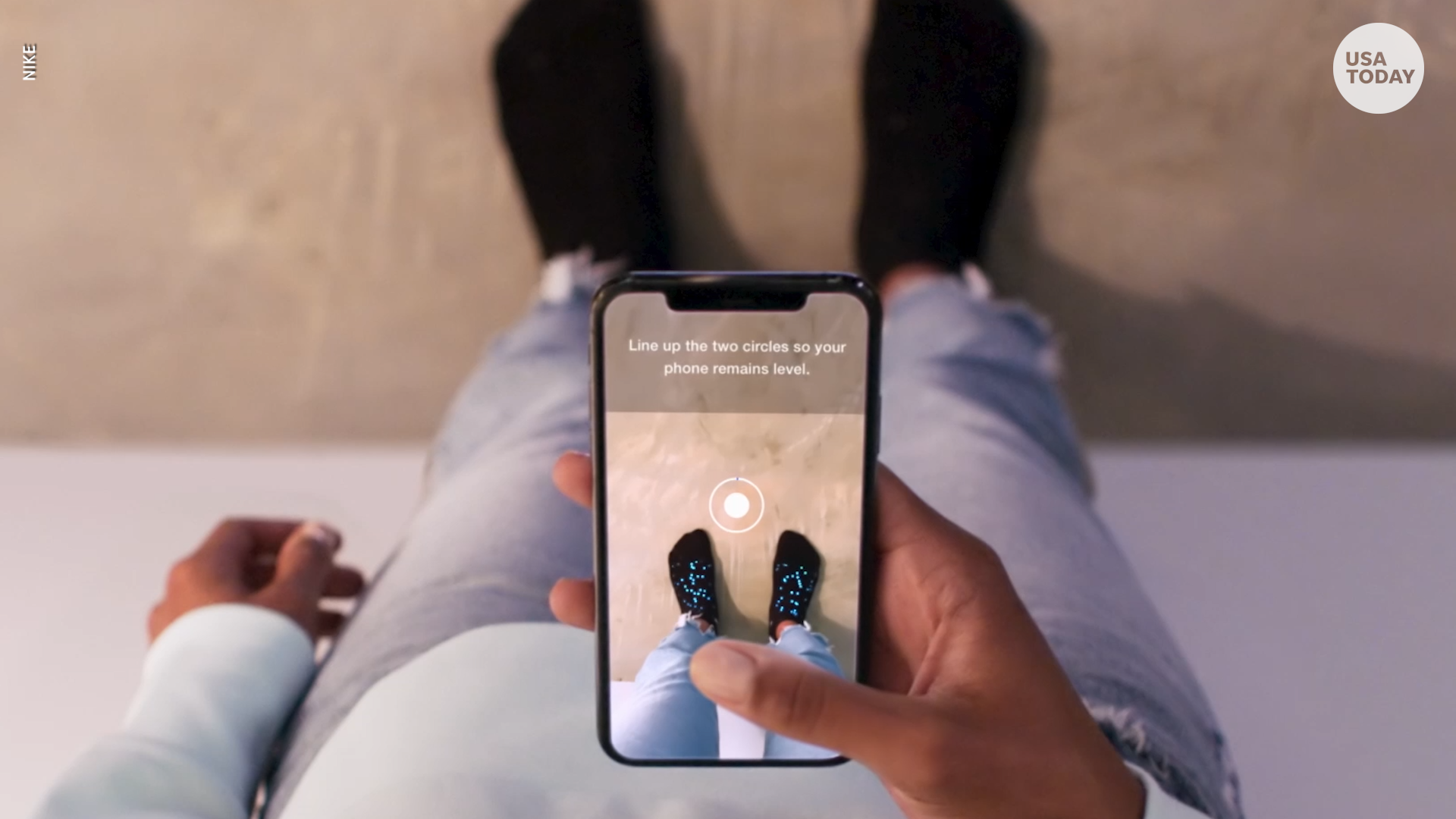
Smart phone, smart cars, smart homes, what’s next? Nike is launching an AR function within the Nike app so users can scan for the correct shoe size. This came from an insight that 60% of consumers are wearing the wrong shoe size. Now using the app, customers can get the most accurate suggestion down to the millimeter.

Nike has always been an active player in incorporating technology, so it’s no surprise they’re continuing to push the boundaries of innovation by acquiring a 3D scanning company that uses real data to provide a service that no one knew they needed and bringing convenience right to them. While most people don’t see the need to measure shoe size, Nike aims to educate consumers on why this is important, especially since the wrong shoe size can lead to serious physical injuries.

This is not only a cool feature to have that affects the point of purchase, but this also means more data for Nike in regard to their target. Now depending on the age, Nike can make predictions to when the customer is most likely to look for a new purchase and be in the forefront of the mind.

Chipotle Offering Buy One, Get One Free Burritos for Teacher Appreciation Day

Image result for chipotle teacher appreciation day

Chipotle celebrated National Teacher Appreciation Day post 3pm by giving away a free burrito, burrito bowl, salad, or order of tacos with the purchase of another menu item for teachers and school staff. It’s a buy-one-get-one free situation.

Releasing the following statement, Chipotle: “believes that cultivating a better world begins with education… Our annual Teacher’s Day BOGO is just one token of appreciation we have for all the educators across the nation.” Chipotle are not the only location that ran offers for the day, but they were the most compelling compared to other locations that offered discounts and/or add-ons which made them stand out amongst the competition.

How can Jack roadmap a promotional calendar based on supporting national celebrated moments, outside of LTO’s specifically?

Microsoft Could Make Gaming More Accessible With this Xbox Controller Patent

Xbox Microsoft Braille controller patent techMicrosoft is looking to drive accessibility in the gaming industry with their new controller patent, which looks to change their standard Xbox controller by adding a Braille display for vision impaired gamers and paddles for Braille input. This is a big leap towards making gaming accessible to all players—not just those who can hold and manipulate the console’s standard controllers.

On the front, the controller looks like a standard Xbox gamepad, but technical illustrations in the patent filing reveal upgrades that include a bump matrix display, capable of displaying braille characters, that’s positioned where a gamer’s fingers could easily reach. It could lead to the development of new games that are specifically designed for the visually impaired.

With 48.9 million people in the US reported as having disabilities, of which 24.1 million are reported to be severe disability, it’s clear Microsoft is taking a strong stance of driving inclusivity within the gaming industry.
With the 2020 Paralympics just around the corner, brands will soon start to plan and develop disability-inclusive campaigns. However, as brands, we need to do better at connecting Disability with diversity and inclusion efforts, not just during the Paralympics.

Google I/O 19 Announcements

Image result for google io 19

Google had the annual developers’ conference May7-9. While most updates are geared towards developers and engineers about Google and Android’s updates, every year, this becomes a key event with some relevant news to the consumer. This year, many updates were centered around: Connectivity and XR.

A primary example of connecting to the “real world” is the Google Lens. Not only is the image recognition technology even more refined, but Lens is using data and features from Google Maps to tackle the food industry. You can point the camera at a menu, and Lens will populate reviews, photos from Google Maps, suggest specific items, and even calculate tip and split the bill.

This is not only a great way to partner as a QSR brand and highlight LTO menus once paid media opportunities open, but an even bigger opportunity to incorporate AR technology. XR is only as strong as the accuracy of reading what’s beyond the screen and providing a beneficial experience. Google aims to do exactly that by focusing on helping the consumer, rather than highlighting it purely as an enjoyable experience.

Other updates from the I/O 19 include:

  • Nest Hub now includes a camera: performing facial recognition to cater to different members of the family
  • Live Caption to all videos including camera roll, in-app, on web, even video chats
  • Incognito mode on Google Maps
  • Google Go, a search app that helps read out loud real-life texts for those who are illiterate or visually impaired

Instagram Tests Hiding Likes

Instagram No Like Counter

Instagram will be testing a feature in Canada, hiding likes on other peoples’ photos. The owner of the account will still be able to see the number of likes, but the purpose of this test is to see rather the emotions users will show.

From anger to relief, the number of Instagram likes cause an emotional upheaval especially in today’s Millenials, and is the most detrimental social networking app for mental health.

By removing the instant gratification function, Instagram is also eliminating a social currency. Especially with influencers, a “like” directly correlates to engagement, which is the ultimate standard for brands. Brands will now put higher emphasis on comments and followers of an influencer. Brand integration and featuring may fluctuate given the response may not be quantifiable, and loyalty will heavily rely on sentiment.


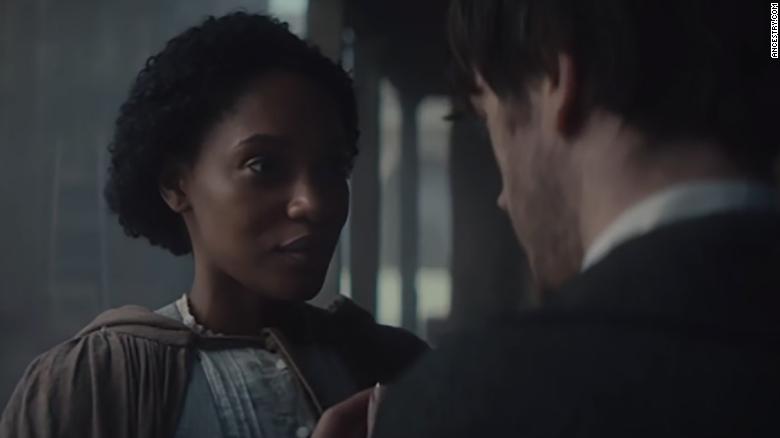
Ancestry.com Apologizes for Tone Deaf Ad that Romanticizes Slavery

anti slave

After a whirlwind of criticisms from the public of romanticizing slavery, Ancestry.com apologized and pulled down it’s recent commercial. The video attempted to explain the White heritage of many Black Americans by highlighting an interracial romantic snippet, but downplayed the gravity of slavery and its consequences.

This is not the first time a brand’s been deemed tone deaf (here is a list for more criticized ads if you fancy some Friday entertainment). There wasn’t a single major social site that didn’t jump on the topic of Kendall Jenner’s Pepsi ad.

Especially as marketers, we’re tempted to simplify these situations with, “How did this ever get passed so many people?”. But this serves as a lesson for us to consider when reviewing our own work:

First is if we’re understanding our people well. Have we put ourselves in their shoes? When speaking to a niche audience, do we simplify them into boxes and stereotypes, or consider the possibility of being a wider spectrum? Do we stop to question what terms have become “normal” in the industry, or make effort use appropriate terms like Latin X and Black Americans instead of Hispanics and African Americans? Our lingo makes a difference especially to the younger audience like Millennials and Gen Z who are more conscious and take it personally.

Secondly, in our processes and structure, are we giving a platform for different opinions to be expressed, concerns to be voiced, and constructive criticisms to be shared? Do we mirror diversity in our decision making – cultural, gender, expression?

Third, we know different demographics have different values & consumption trends, take Gen Z for example who are more likely to connect and support brands that align with their values yet often prefer to consume content that’s funny, bizarre, and unexpected (i.e. memes, dark humor, ‘finstas’). So, to speak to them authentically, brands have the responsibility to walk the font fine line between voicing values/opinions whilst communicated often in a fun and light-hearted way.

Understanding the human mindset is not as simple as an algorithm (even though sometimes algorithms push the boundaries to do it better). We need to consider these key points to ensure we’re developing a larger brand voice that is fitting and natural for the specific target in mind.

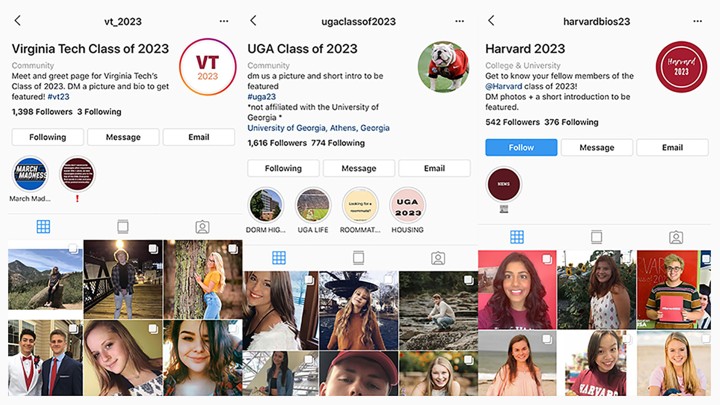
Incoming University Freshmen Classes Create Instagram Accounts to Connect

insta

Students and University administrations are creating Instagram accounts such as @Penn2023 and @WashU2023 to create a space for prospective students to make friends, share tips for classes and/or transportation, etc. before they came on campus. Each student sends in a picture of themselves and a short bio to the account, and each school’s account will validate and posts on the account.

While traditionally, universities have created these accounts on Facebook, they’re quickly adapting to the platforms that are being utilized by this audience – the freshmen Class of 2023 is the Instagram generation rather than the Facebook generation.

Currently, these accounts are not recognized as “official” school accounts, but this trend is growing throughout the US to proliferate into more schools. What this means for brands is that sponsoring activities are no longer on campus ground, or even bound to the traditional fall to summer time. Since most acceptance letters go out during spring, there’s an online opportunity to sponsor these prospective students during the 6-8 months before they are even physically on campus!

San Francisco Planning to Ban Facial AI Recognition

sf cap

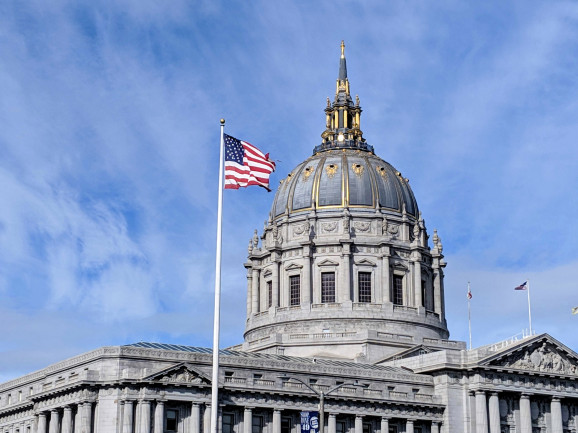
San Francisco may become the first city to ban facial recognition software with an ordinance called ‘Stop Secret Surveillance’. Many are starting to view this technology as an invasion of privacy and gathering of information for unknown purposes. Under this ordinance, surveillance technology includes license plate readers, biometrics (Iris and facial scanners), and software that allegedly forecasts criminal activity. Part of what ignited this ordinance is China’s current surveillance and monitoring of Muslim citizens.

While AI is growing and being refined, we must consider consumer’s negative perspectives, which largely is the presumption that their privacy is becoming threatened. As we’ve seen before, data leaks and hacks have left many consumers weary of sharing their data. While using AI such as voice activation/recognition, AR and other new forms of technology are innovating for brands, there still needs to be conscious efforts to gain their consumer trust and data protection.