GoT Final Season: A True Cultural Moment for Brands

game of thrones brands

Every summer during the past 8 years, Sundays were marked as a holy day bringing friends and families together (or apart). We’re talking about Game of Thrones.

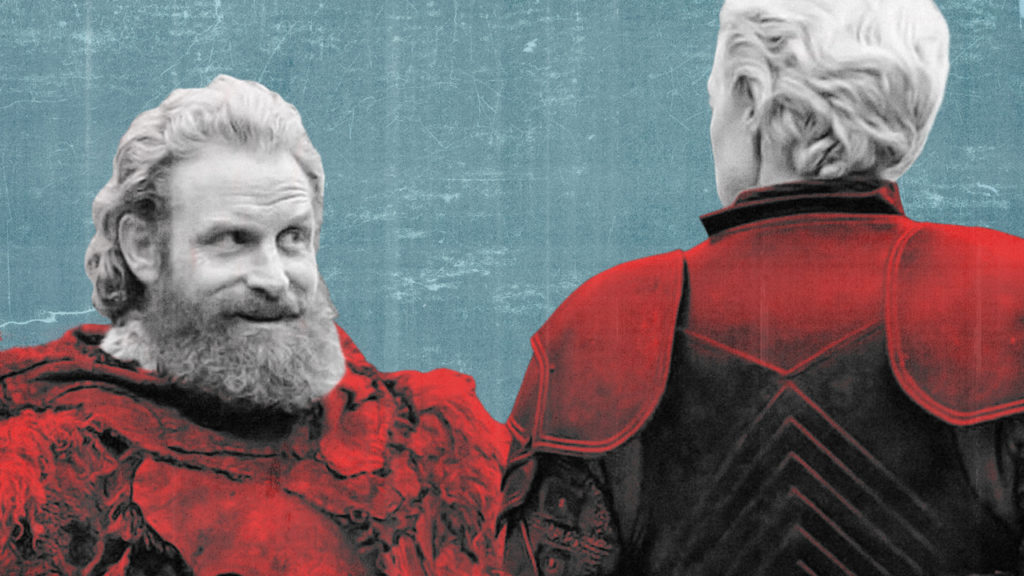
It’s become a household name, a conversation topic for both viewers and nonviewers, and with the finale this year, brands have gone all in to take advantage of this cultural moment. We’ve seen bigger plays such as Oreo’s limited-edition of insignias on the cookies and Mountain Dew temperature-triggered Arya’s kill list revealed, both receiving love all over social media. Starbucks unintentionally took part in this when a scene accidentally featured a Starbucks to-go cup in front of Emilia Clarke, resulting in about $2-3 billion in free advertising with #StarbucksCup uproar.

Over 100 brands have partnered to incorporate GoT in the consumer journey, from SuperBowl TV ads to packaging, and products and merch, and even tattoo designs.

What does this mean? It means that brands are taking “cultural moments” farther than traditional tentpole events, like the Oscars and Super Bowl. We’re not only looking for the next Super Bowl, but we are looking for the next Game of Thrones.

What does this mean for us? It means that it’s time to rethink the definition of “cultural moment”, as something that people are waiting for, rather as an opportunity to shape how people think such as the Curly fry moment.

Connected Cars: Now Connected to Biometrics

In this illustration, the viewer looks through the windshield from inside a car and sees a green square around a blurred persons face.

Connected cars have become a topic of conversation since we first started hearing about adding Alexa and Google Home into cars, bringing the home beyond a home.

However, automakers are going beyond the virtual assistants to connect cars to the human body. Cars will soon be able to recognize the driver and passengers by their eyes, skin, gait, and even heartbeat. Using facial and iris scans, as well as voice and fingerprint tracking, the car will be able to accurately identify the person and adjust seats, mirrors, etc. and start the engine without a key. This means detecting factors such as alcohol levels and fatigue, and for sure will adjust how insurance plans are catered to each person.

While the privacy concerns will be a huge hurdle and exact timing of execution is unknown, this shows that connectivity is becoming more prevalent. Connected cars are over 10x more expected to be used than self-driving cars, showing that we as people trust ourselves much more than releasing 100% of the control to a machine.

Cars are becoming the second home and will hold even more data now than ever before. Understanding how to capitalize on this from a QSR standpoint is interesting, will there be body language trends for those that are hungry that can fire off a message for Jack in the Box LTO?

Nike Launching Smart Shoes

Image result for nike ar

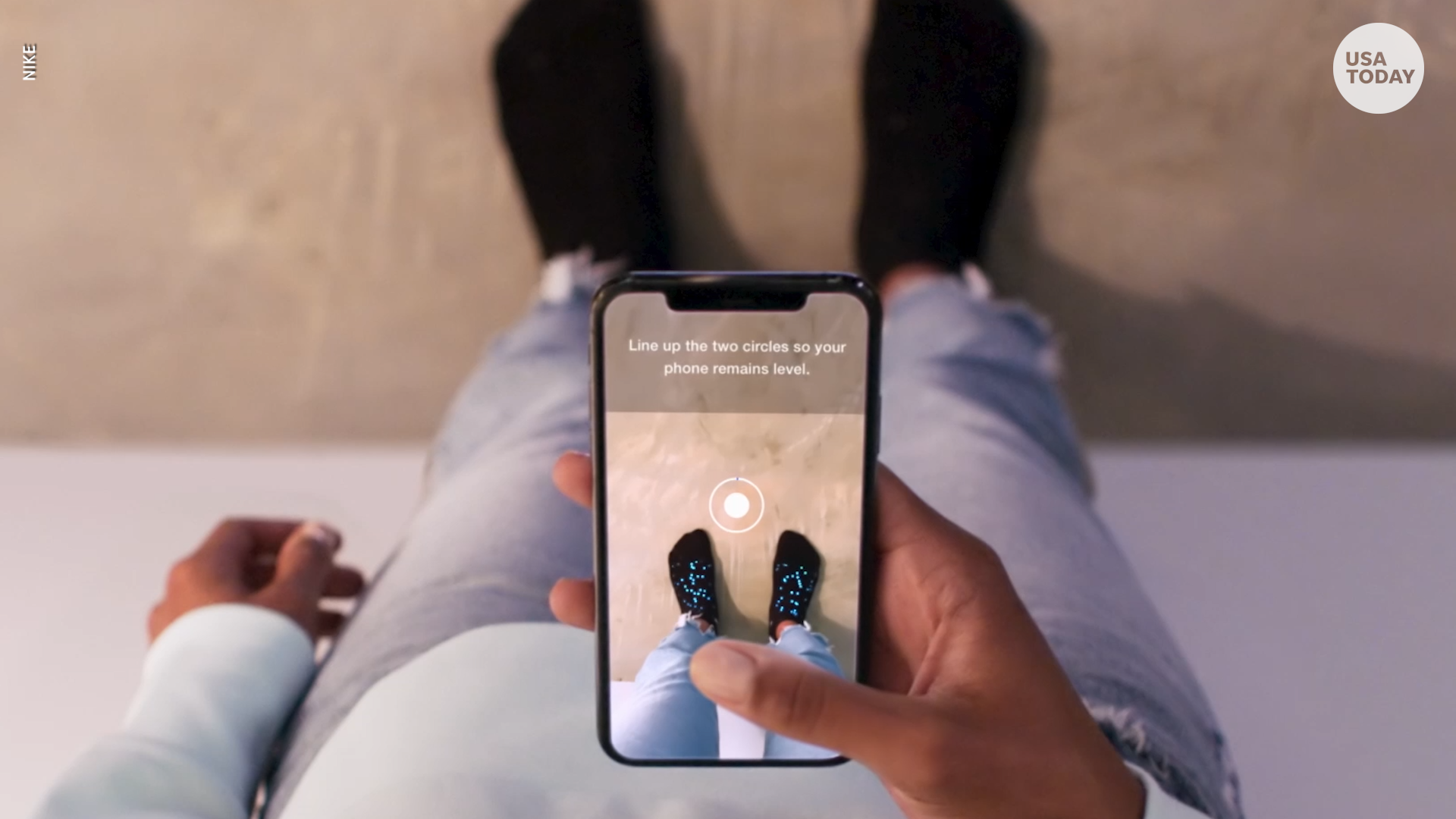
Smart phone, smart cars, smart homes, what’s next? Nike is launching an AR function within the Nike app so users can scan for the correct shoe size. This came from an insight that 60% of consumers are wearing the wrong shoe size. Now using the app, customers can get the most accurate suggestion down to the millimeter.

Nike has always been an active player in incorporating technology, so it’s no surprise they’re continuing to push the boundaries of innovation by acquiring a 3D scanning company that uses real data to provide a service that no one knew they needed and bringing convenience right to them. While most people don’t see the need to measure shoe size, Nike aims to educate consumers on why this is important, especially since the wrong shoe size can lead to serious physical injuries.

This is not only a cool feature to have that affects the point of purchase, but this also means more data for Nike in regard to their target. Now depending on the age, Nike can make predictions to when the customer is most likely to look for a new purchase and be in the forefront of the mind.

Microsoft Could Make Gaming More Accessible With this Xbox Controller Patent

Xbox Microsoft Braille controller patent techMicrosoft is looking to drive accessibility in the gaming industry with their new controller patent, which looks to change their standard Xbox controller by adding a Braille display for vision impaired gamers and paddles for Braille input. This is a big leap towards making gaming accessible to all players—not just those who can hold and manipulate the console’s standard controllers.

On the front, the controller looks like a standard Xbox gamepad, but technical illustrations in the patent filing reveal upgrades that include a bump matrix display, capable of displaying braille characters, that’s positioned where a gamer’s fingers could easily reach. It could lead to the development of new games that are specifically designed for the visually impaired.

With 48.9 million people in the US reported as having disabilities, of which 24.1 million are reported to be severe disability, it’s clear Microsoft is taking a strong stance of driving inclusivity within the gaming industry.
With the 2020 Paralympics just around the corner, brands will soon start to plan and develop disability-inclusive campaigns. However, as brands, we need to do better at connecting Disability with diversity and inclusion efforts, not just during the Paralympics.

Google I/O 19 Announcements

Image result for google io 19

Google had the annual developers’ conference May7-9. While most updates are geared towards developers and engineers about Google and Android’s updates, every year, this becomes a key event with some relevant news to the consumer. This year, many updates were centered around: Connectivity and XR.

A primary example of connecting to the “real world” is the Google Lens. Not only is the image recognition technology even more refined, but Lens is using data and features from Google Maps to tackle the food industry. You can point the camera at a menu, and Lens will populate reviews, photos from Google Maps, suggest specific items, and even calculate tip and split the bill.

This is not only a great way to partner as a QSR brand and highlight LTO menus once paid media opportunities open, but an even bigger opportunity to incorporate AR technology. XR is only as strong as the accuracy of reading what’s beyond the screen and providing a beneficial experience. Google aims to do exactly that by focusing on helping the consumer, rather than highlighting it purely as an enjoyable experience.

Other updates from the I/O 19 include:

  • Nest Hub now includes a camera: performing facial recognition to cater to different members of the family
  • Live Caption to all videos including camera roll, in-app, on web, even video chats
  • Incognito mode on Google Maps
  • Google Go, a search app that helps read out loud real-life texts for those who are illiterate or visually impaired

Instagram Tests Hiding Likes

Instagram No Like Counter

Instagram will be testing a feature in Canada, hiding likes on other peoples’ photos. The owner of the account will still be able to see the number of likes, but the purpose of this test is to see rather the emotions users will show.

From anger to relief, the number of Instagram likes cause an emotional upheaval especially in today’s Millenials, and is the most detrimental social networking app for mental health.

By removing the instant gratification function, Instagram is also eliminating a social currency. Especially with influencers, a “like” directly correlates to engagement, which is the ultimate standard for brands. Brands will now put higher emphasis on comments and followers of an influencer. Brand integration and featuring may fluctuate given the response may not be quantifiable, and loyalty will heavily rely on sentiment.


Domino’s Bringing In-Car Ordering to New Vehicles in 2019

dominos-bringing-car-ordering-new-vehicles-2019-1553515465

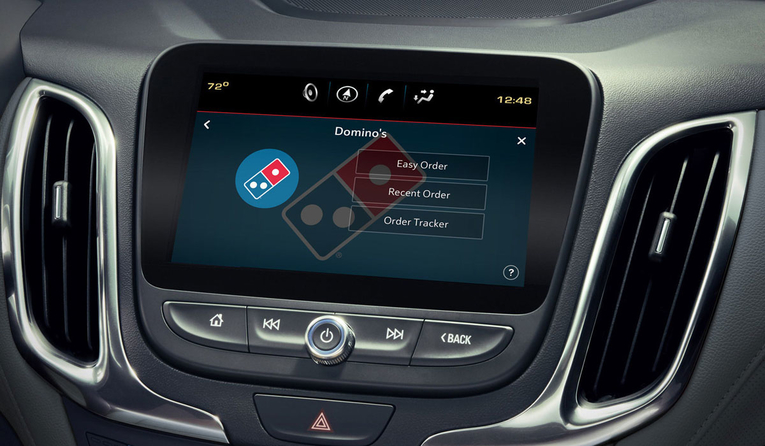
Dominos will partner with Xevo to launch an in-vehicle app platform in which drivers can order their pizza on the screen while they’re on the road. This new in-vehicle app will perform the same functions as the mobile app such as ordering, finding store locations and being able to track one’s order. One feature of the app is to have the user’s recent or most ordered items already preloaded so when they use the app again it’s just as simple as pressing one button.

More than ever customers are craving convenience especially when they’re on the go. Being able to have a platform in which people can act upon their craving’s instantly is enticing for several reasons but most importantly it allows for the consumer to be less overwhelmed by options if the opportunity is already being presented to them with such ease. This theme of having a personalized platform that is constantly learning and making smarter decisions to understand the wants and needs of a consumer, makes the platform more appealing. Given some of Jack’s major markets are heavy commuter DMAs this tactic could prove effective by getting those people on the road to pre-order meals to conveniently have them ready to eat by the time they get home. We also know drive thru is a major part of Jack’s business.

Chiquita Unpeels AR Snapcodes For World Banana Day

2_1212545_e

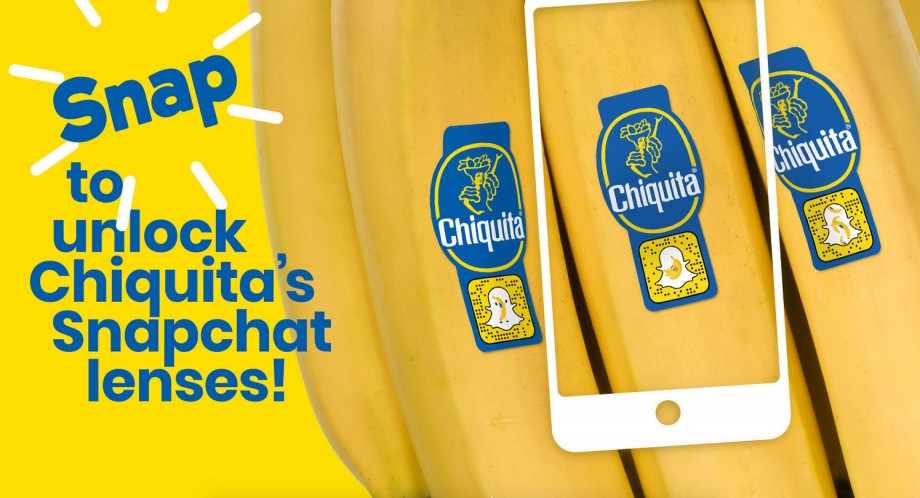
To celebrate World Banana Day on April 17th, Chiquita teamed up with Snapchat to mass produce 200 million of their signature blue stickers to include a Snapcode which leads consumers to a one-of-a-kind AR experience on the platform. The campaign will start in the United State and roll out worldwide after the original 4-week run. The users will be led to 3 various AR experience, each to be found on separate stickers. The first experience turns users into a dancing banana, the second is a face lens and the last is a gamified lens in which users catch falling fruit into a bowl.

To an older generation, the iconic blue sticker on the Chiquita brand made the company the most recognizable and successful fruit business in the world. To stay relevant to a newer generation, Chiquita understands how the power of adapting to online consumption plays a role in evolving brand association and retaining legacy. There is also a simplicity in the campaign execution that would be rather turn-key for brands to engage with. Jack could find effective ways to utilize packaging or even customer receipts house these social codes that access engagement. It was very clever and calculated to launch the activation on a day extremely relevant to the brand.  Chiquita is not alone in utilizing the power of AR capabilities on Snapchat to promote their campaigns. Warner Bros. used a first-ever voice command Snapchat AR function to coincide with the release of their new superhero movie Shazam!

Pandora Unveils First Sonic Logo In Campaign Refresh

s3-news-tmp-127306-screen_shot_2019-03-20_at_10.43.39_am--2x1--940

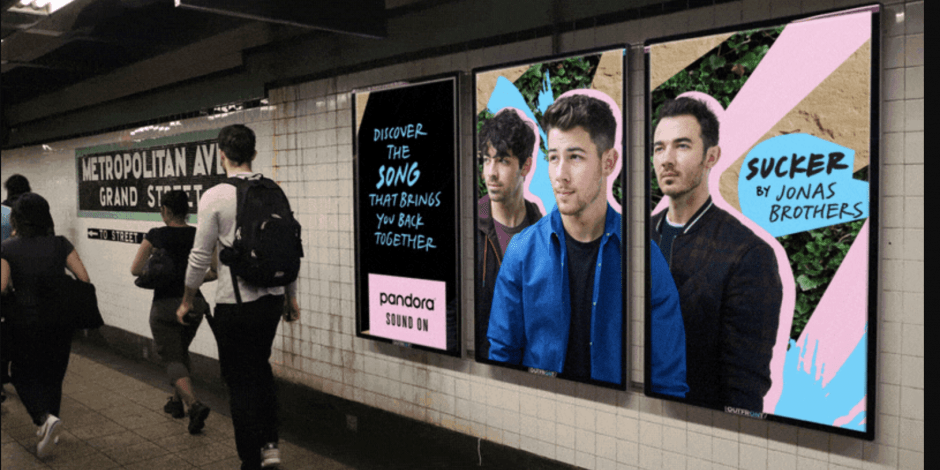
Pandora utilized audio capable OOH to launch their newest campaign in an effort to boost their first “Sonic Logo” or a sound cue associated with the brand. As the world of streaming audio is becoming increasingly more crowded thanks to several platforms branching into the space. Pandora is testing out an audible sound cue to stay top of mind with listeners. For a 12-week run in 5 major US cities, Pandora will be executing digital OOH boards that utilize a 3 second sound bite of the platform’s audio associated with their app startup. These boards will be placed across foot traffic-heavy locations such as malls, airports and major city streets. After the 12-week run, Pandora will be utilizing the audio logo within the app itself to keep the sound associating running indefinitely.

Audible branding is a technique for brands to break through the clutter of the crowded space and set themselves apart (Think of Taco Bell and their signature “ring” noise).  It can provide an additional recognizable extension of the brand beyond a visual logo. Brands who find innovative ways to assimilate these audio cues will eventually keep top of mind to loyal or potential consumers. With the rise of streaming audio services and podcasting, audible logo strategies will be even more of an incentive for brands to utilize the capabilities. Given Jack is looking to incorporate cross channel executions it would a great play to interject digital audio logo tactics to existing OOH media running throughout the various markets to create that association while people are on the go.

Walmart Will Let You Shop For Groceries Using Google Assistant

nexus2cee_google-home-4

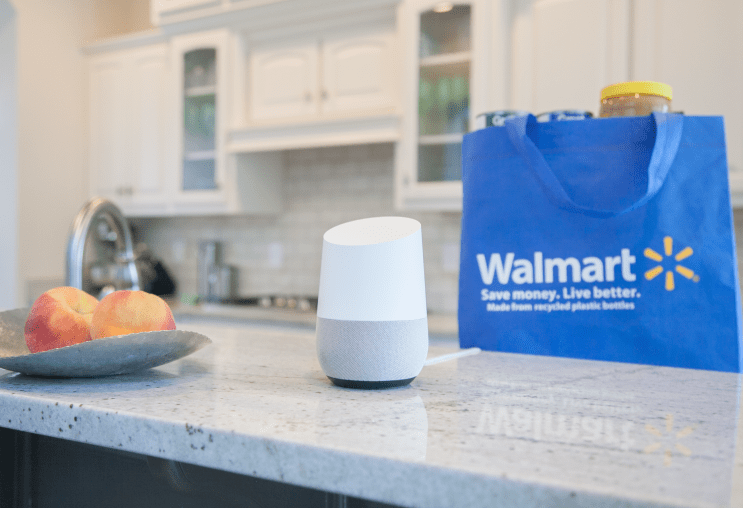
Retail superpower Walmart announced that it has partnered with Google to offer voice-controlled Google Assistant grocery shopping for customers. This announcement comes on the heels of voice-ordering innovator Amazon acquiring Whole Foods and declaring they were going to slash prices company-wide. The company has created a new command with Google Assistant so anytime someone says, “Hey Google, talk to Walmart” the user will automatically be taken to their virtual shopping cart. Right now, the function only allows for customers to voice-order fruit and basic groceries from Walmart. In the press release there was mention that this new feature will use AI to remember reoccurring orders and recommending it when people ask for that specific item.

The push for voice-ordering from Walmart and other retailers in the space is due in part to the recognition that shopping habits in the United States are shifting drastically. As more people have access to order through mobile devices and home assistant, the less there is a need for consumers to physically shop in-store. The dynamics of purchasing behavior is due to the connectivity of devices people are using every day. It’s important for companies and brands to adapt to rapidly changing purchasing habits of consumers.