Study: 75% of consumers want more rewarded content like videos, surveys

Pandora

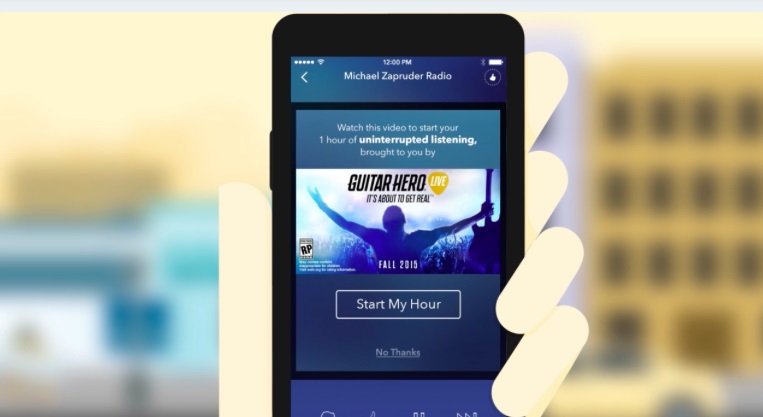
Consumers who are frequenters of business often expect some form of reward for their persistent purchases. Studies have shown that to get these rewards people are now willing to follow through with alternative ways to get the rewards. According to Merkle backed HelloWorld, about 61% of people surveyed stated they want to be surprised by their next brand sponsored reward. This surprise may include watching branded videos or taking surveys in exchange for exclusive content or discounts. For instance, the ad supported version of Spotify often gives people an ad-free hour of streaming if they opt-in to watching a :30 promoted ad. If Jack could provide consumers with added incentive through exclusive content, brand sentiment would be positive.

The HelloWorld study states that mobile app was the preferred method of accessing these loyalty-based rewards because of the increasing YOY sift of online activity from consumers. Since online devices can be easily retargeted based on people’s purchasing behavior, it makes the most sense to “surprise” consumers via mobile app offers. Since Jack is looking to surround themselves in those lean-in moments, and it’s harder than ever to garner attention of the consumer, looking to align with platforms that provide consumers with an incentive such as a first look access at exclusive content or movie premier etc. in replacement for viewing an ad will help drive brand love and resonance.
How Podcasts Spell Huge Opportunities For Brands and PR Houses

podcast.png

Podcasts are becoming a prime space for brands to capture audiences at their most engaged level. With over 2.6 billion downloads in 2018, podcasts are a growing platform that are continued to be viewed as valuable ad space. Streaming audio giant Spotify recently required Gimbal, the major podcast production company to help add more programs to their already growing library. This acquisition will provide brands a new avenue to purchase ads within podcasts to reach their intended audience.

We’ve seen examples of brands who have launched their own branded podcasts, Trader Joes being a successful example. Their branded 5-part episode podcast was un-expectedly in the top 10 Podcast download, featured on Apple Podcast. Joes has become a cultural phenomenon because of their affordable yet highly unique products. This podcast saw great success, why? Because people want to know more about relevant brands because they want to do be a part of a bigger social conversation. McDonalds had a limited series podcast in which they discussed their perceived disaster strategy campaign of releasing their widely popular Szechuan Sauce out to the public. This PR stunt saw great success given McDonalds provided consumers the behind the scenes storyline. Staying on top and ahead of cultural moments, or purely providing more insight into our business is key for brands to continue to cut through the clutter and have a voice. Ultimately this showcases the power Brands have, if done correctly, to drive a loyal and engaged fan base. Jack brings such a unique voice to the QSR landscape, it would be a natural fit for us to align with a podcast or better yet, create a podcast that holds true to our brand values that attracts that younger, more engaged audience.

A New Kind of ‘Drive Thru’

kfc fb

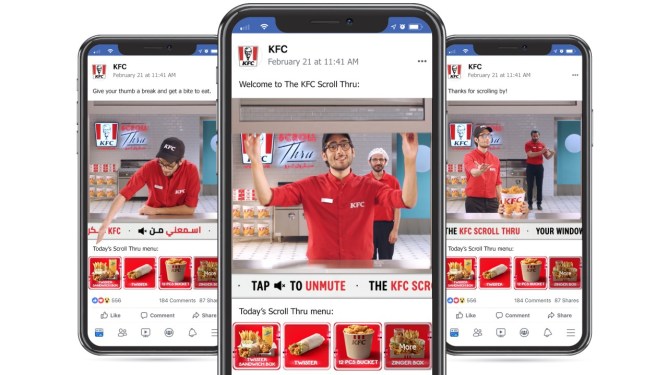
KFC Middle East is taking the experience of a ‘drive thru’ and replicating this within Social Media feeds. In the appearance of ad, a virtual window is rolled down to reveal a KFC employee who greets the guest (the person scrolling), and asks how he can assist them satisfy their KFC craving with suggestions of menu items available. Users can then swipe through and have the capability of ordering instantaneously.

Consumers online today are very smart, and are weary of ads interrupting their online experience. KFC has opted for a more engaging unit, rather than pure awareness assets such as video and static imagery which can often get scrolled past within a split second to combat this. They’ve also looked to bring delivery to a platform where consumers already are, rather than trying to direct them to another platform/app so the consumer can easily pick what he/she is craving and place an order without interrupting their online experience. We’ve seen Taco Bell recently create the first ‘ski thru’ drive-thru, KFC with an Instagram feed drive-thru, so what are we at Jack with the Drive-thru space given we were the real innovators (OG) of Drive-thru in the QSR space?


Hermes Adds Augmented Reality Video Messages to its Parcels

ar vr

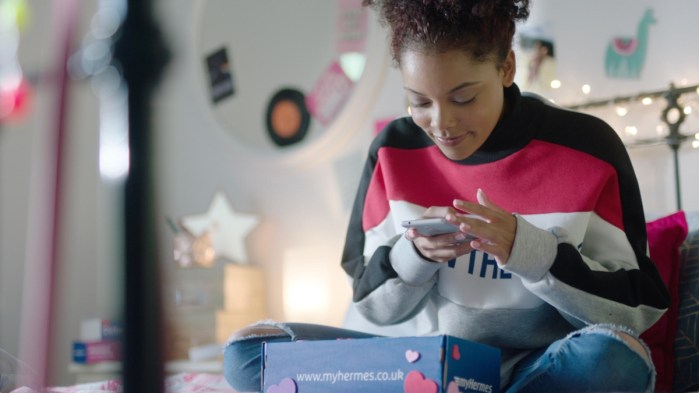
The delivery company Hermes wants to make package deliveries more personalized and meaningful by giving the sender a chance to connect with the recipient via a personal video message. To do this, their Innovation Lab created Hermes Play, which allows a pre-recorded message to be uploaded via the Hermes Send App. A 2d barcode can be scanned on label by the recipient to view the video message, which will be displayed using AR that plays on the parcel itself.

With a decline in personal hand written cards over the years, and the act of even picking up the phone to call friends/relatives becoming almost obsolete, Hermes is looking to become the modern solution to intimate connections with these AR video messages. With big events such as Mother’s/Father’s Day, Valentine’s day, etc. can Jack inject himself into the movement and drive an emotional response from our consumers with personalized ‘Jackogram’ AR style messages/content?

More Retailers are Jumping into Dynamic Pricing

ABV-Cartwheel-Header

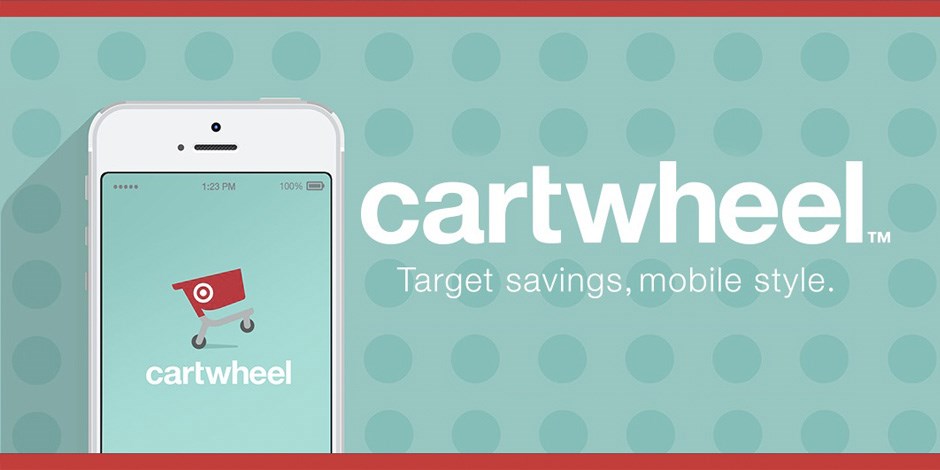
Target is one of the major brands effectively using dynamic pricing: a user is targeted with a higher price point, then retargeted with a discounted price. As more retailers are pressured by the giant, Amazon, this has become an alternative to give the impression of a lower price. Uses are various, such as targeting frequent customers with exclusive discounted offers to retain their loyalty, or based on the user’s location to drive in-store traffic.

While this may initially be a smart idea, this can also backfire once the customer finds out that prices can change based on their information. Target has used this to their advantage to promote their app, Cartwheel, to let users scan the barcode and if they find a lower price, it would automatically be discounted at checkout.

One thing we can learn through Target’s case study is how they have included the app in this – shoppers want a low price, and they can find it on the app. For Jack, it’s not so much about the price point, but how we can make the consumer journey personal to each customer.  Jack is utilizing dynamic creative to speak to different audiences based on their language preference, habit, etc. How can we simultaneously promote our loyalty programs naturally through targeting?

US Digital Ad Spending Will Surpass Traditional in 2019

digital-spending-CONTENT-2017

For the first time in industry history, advertisers will be spending more on digital initiatives than traditional channels. According to eMaketer, in the next 4 years the digital spending dollars will be outspending traditional media by nearly 2/3rds. 2019 ad spending sees that digital advertising is 54% of overall media dollars. This year also marks the first for digital giants Google and Facebook as this is the first time that shares for both companies has declined as digital revenue grows. This decline could be due to the growing privacy concerns that has haunted Facebook over the last year. The biggest winner in the digital spending war has been Amazon. According to eMarketer, the revenue share has increased by 2% from 2018. The company has seen a recent boom in revenue because of the rich behavioral data is has to offer due to its constant traffic of online customers.

Traditional media has declined across the board except for OOH spend which could be attributed to the digital capabilities the channel has been integrating in recent years. From last year alone, the overall ad spending dollars is projected to decrease by nearly 6%. This can be explained by the shift of how people are consuming media in today’s age. The world is becoming more connected and online media is leading the environment of change.  Traditional media has been slower to adapt and needs to be more innovative to maintain relevancy & impact in the media space. Television spending will see a decrease by over 2% from last year because of less culturally relevant lean-in moments taking place (i.e. Olympics, elections, etc.)

What is key for brands is to adapt to the changing media landscape and to place their dollars effectively based on where the audience is gravitating. By understanding the exact audience, brands have the ability to effectively place budget into channels that make sense. The shift to digital media could be explained by the younger generation being much more receptive to online advertisements than previous generations. As the younger generation shapes the future of where media trends will go, it is important for brands to keep up with the trends to grow their audience base as well has competitively conquest potential customers.

How IoT-Connected Cars are Modernizing Grocery Delivery

connected-cars

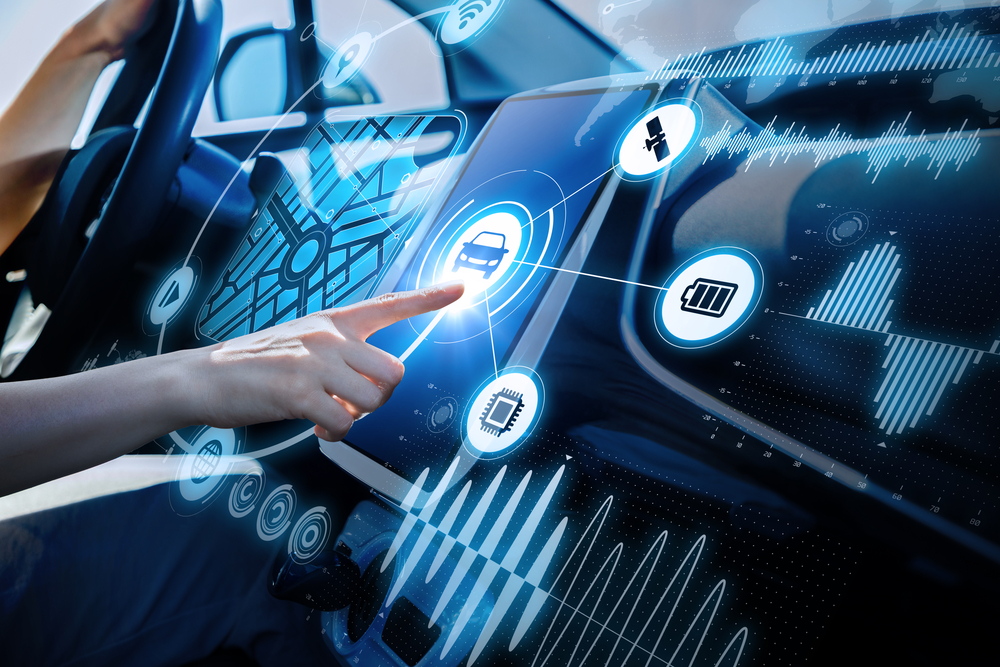
Consumer behavior is making the shift to wanting products and services on-demand as oppose to the traditional business model of stocking up. People are looking to get their services and products where they want them and when they want them. IoT (Intelligence of Things) Technology is shaping the connected car of the future. This vehicle aims to deliver groceries straight to consumers, providing them with traffic updates, estimated arrival times and real-time tracking information.

With more companies willing to adopt new IoT technology into their everyday operations, the more innovative their business model can become. IoT technology gives the consumer a sense of personalization because each interaction is catered specifically for the individual who is using the device and therefore has the potential to increase customer favorability. Jack specifically could have the ability to implement connected cars to increase the number of automated delivery services from online/mobile ordering. This technology could even be incorporated into in-store kiosks and drive-thru devices to decrease customer wait times as well as less frequent ordering errors.

Apple’s Streaming Video Service is Reportedly Launching This Spring

276214

The streaming wars show no signs of slowing down anytime soon. Reports allege that Apple is in motion to launch their own streaming service to rival that of other major streaming platforms. It is reported that not only will Apple create their own original content but it will partner with various established studios to launch exclusive programming. Examples of the exclusive content they have released prior on their Apple Music platform has been reality show, Planet of the Apps and the hit segment Carpool Karaoke.

All original content will be housed on the streaming platform for paying customers to access much like the competitive landscape.

What will be interesting to see coming from Apple is if they will monetize through ads. The company is known as the walled garden and doesn’t even allow foot traffic studies or the sale of their users’ data, especially given the recent FaceTime fiasco. If the company decides to steer away from their walled garden reputation then that would open the doors for brands to be advertised on their platform. This would be an incredible platform to Jack to have equity on because of the heavy connection with music and culturally relevant content that would live on an Apple streaming service. How do we balance in-stream ad breaks to capture those who don’t mind ads, but also deliver a premium experience by integrating Jack in the Box within the storyline?

The Fyre Effect: More Questions Are Being Asked of Influencer Marketing

Screen-Shot-2017-05-03-at-4.56.21-PM

In the wake of the disastrous Fyre Festival, big brands are taking a closer look at their strategy with Influencers. The most important take-way of the entire Fyre Festival Marketing campaign is that the Influencers had little idea of the event they were even sponsoring/ supporting. It also sparked concern with Influencers to make sure they are working for brands who are aligned professionally and personally to their interests.

Trust is an important factor, both between the Influencer and brand, and the audience and Influencer. The main advantage of working with Influencers is that fans have high brand loyalty when peers and are “real human” advocates; so, having a face that represents a brand is extremely important as audiences will have a more genuine connection with those brands who utilize influencers with shared values. – i.e. Hispanic influencer for Hispanic strategy etc. Our iPropect team goes through a multi-step process that involved actively vetting influencers to make sure the individual is the right fit for the brand. For Jack Influencers, we specifically wanted to choose people who are excited about the brand and genuinely wanted to work with Jack in the Box vs. paying a big name who is just looking to add another brand to their Instagram channel. It’s fundamental that we as Jack align with Influencers who share and can speak on behalf of our brand values and tonality – which we saw great success with the Super Jack’d Monday talent who did just this.

Shackleton Whisky uncaps Shazam-powered AR expedition

3d

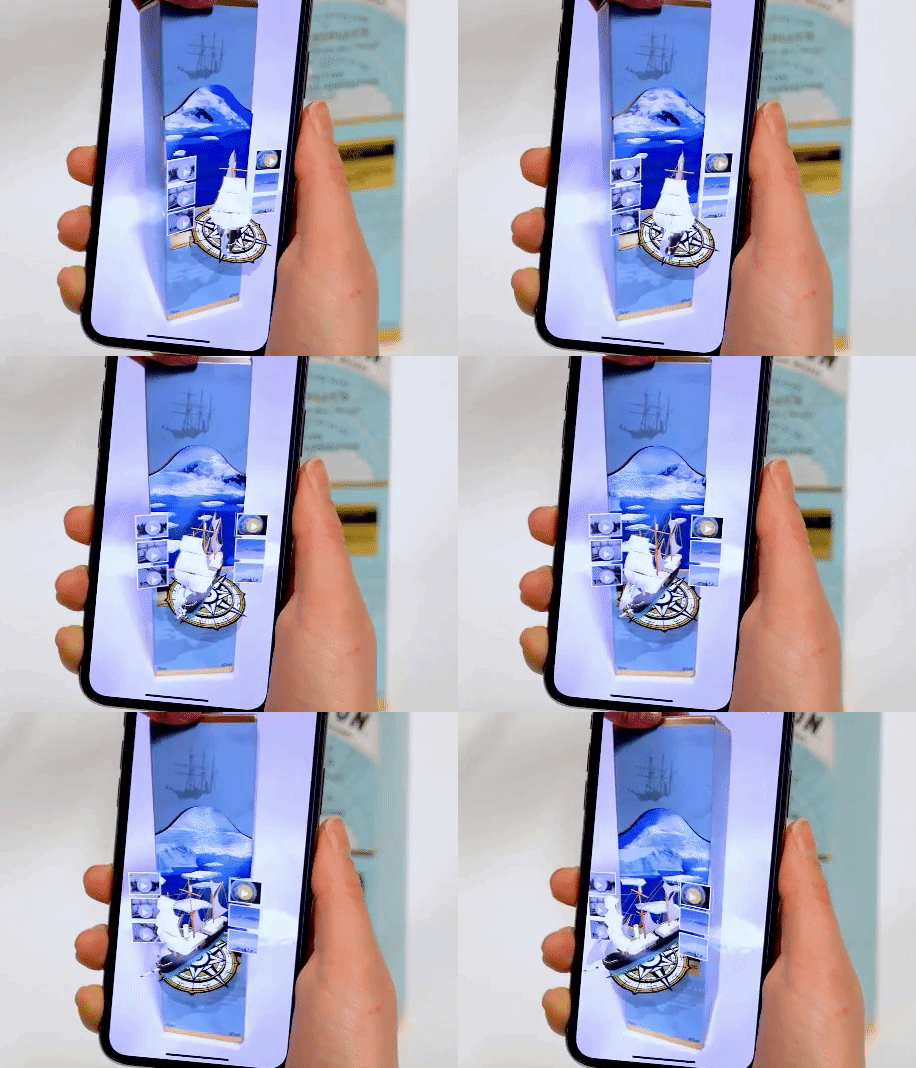
It’s said that a ‘picture is worth a thousand words’! Better yet, can a picture tell you a thousand words? Shackleton Whiskey has figured out a way to let a photo do the talking. Shackleton has partnered up with Shazam for a branded AR experience that will let users take a photo of a “peel and reveal” sticker on its packaging to bring alive a 3D version of their founder’s 1907 Antarctica expedition.

Shazam continues to be an ad-free platform, although continues to showcase innovative ways to drive brand integrations. Shackleton are utilizing their existing assets as their storyteller, their packages, to provide a new experience with little to no change to their existing product and packaging.

AR is fun, immersive and interactive that allows brands to be highly engaged with users. But more importantly, it can be used strongly to drive brand story-telling, which is the case for Shackleton. They’re aiming to cut through the clutter and be memorable versus using only traditional digital formats, by using a platform that’s accessible to large audiences with smartphones. For the QSR space, AR could trigger a range of desired food senses to drive appetite that perhaps a traditional app may not drive as strongly.