BevMo! Hears the Voice of the Consumer

BevMo

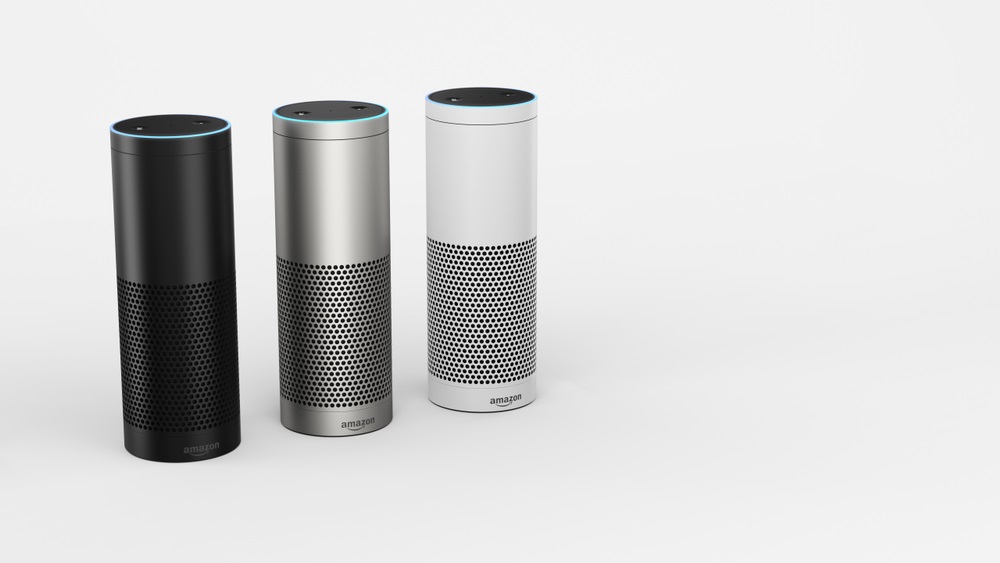
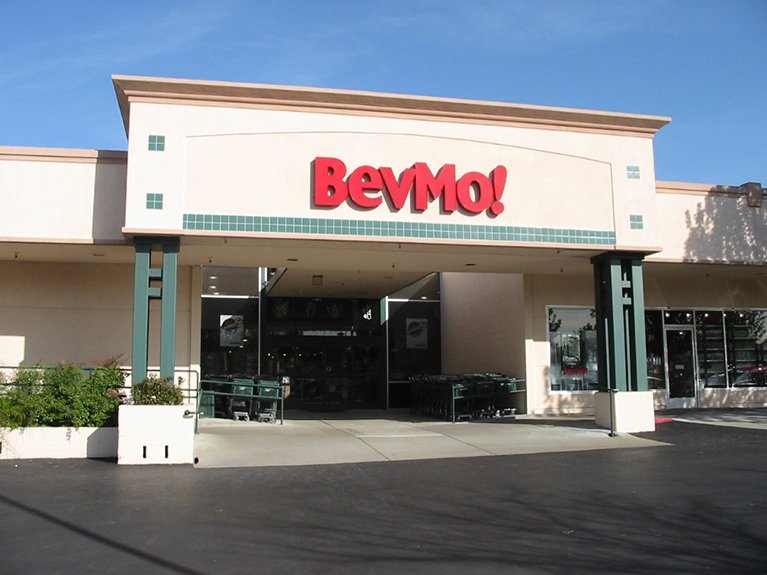
BevMo! Is testing out new voice activated shopping assistant, SmartAisle, to help recommend drinks for shoppers within select California stores only. SmartAisle will be voice activated using AI technology to provide customer support at the point of sale. Shoppers will also have a chance to ask about specific bottles/ brands and receive recommendations for similar tastes. This new feature is aimed to provide a quick and convenient service for a better shopping experience.

As we’ve established in recent articles, Voice Search is becoming more prevalent across multiple devices and home-ordering is showing no signs of slowing down with Home Assistants allowing customers an easy and alternative option to in-app delivery. As voice Technology advances, there is an opportunity for in-store AI POS system to be implemented to help customers order and push new or existing products based on historical data.
Five Things Retailers Should Know About Millennial Shoppers

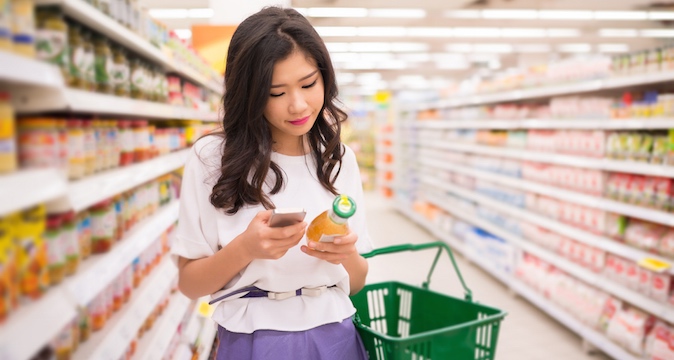
Reading information about product

Millennials hold an enormous influence within all industries, and as this generation continues to mature, so does their digital usage. Brands need to learn to adapt and ensure they are reaching Millennial’s not only with an authentic voice but also the following:

  • Retailers must bridge the gap between in-store and online given that two thirds of Millennials use both platforms to research before making a purchase decision
  • Brands should not ignore the “buy” button and look to incorporate it within their social platforms given that Millennials rank high in social purchases
  • Email marketing continues to be a workhorse for digital marking with guaranteed results
  • Millennials are most likely to embrace emerging Technology, therefore having a favorable reaction to brand messaging through different mediums
  • Lastly, Millennials are willing to bypass the human interaction at POS and favor an automated system

Jack in the Box has already made strides in adapting to emerging and maturing Technology as we continue to refine delivery options and amplify messaging through various online and social channels that speak authentically to Millennials. While Jack in the Box does not use automated POS system, we’ve seen other brands in the QSR space lean in to help reduce labor cost. According to the eMarketer Ecommerce Survey, 57% of A18-34 regularly use an automated POS system therefore introducing an automated system would be welcomed and easily adapted to.

Loyalty rewards, coupons bring QSR customers back

e337162cd98d8ab8ba335d1036ec4ee2

Consumers are attracted to coupon and loyalty incentives when making the decision to try new QSRs. According to a study conducted by Publishers Clearing House, nearly 50% of consumers are enticed to try new restaurants based on couponing alone. Standard ads are not enticing customers like they use to in the world of pre-online devices. They are increasingly year-over-year being attracted to app driven payment when rewards are given for loyal use. In recent years major QSRs such as Starbucks, and Burger King have implanted successful loyalty program to attract potential consumers and retain them by offering substantial bonuses.

Not only do online loyalty programs and discounts entice customers, but users are prone to have bigger digital orders vs in store tickets. Brands have an opportunity to use these programs to their advantage by being able to send these coupons straight to the pockets of consumers to retain their business and entice them to frequent more through exclusive perks. As more brands are understanding that these rewards programs are quick ways to get consideration amongst a crowded field, they are finding loyalty doesn’t come easy or last long.  Larger chains have an advantage in developing more sophisticated apps due to their access to more capital.  However, larger chains aren’t immune to customers multiple choices and in the same study, many have stated that they are not hesitant to go to other QSRs. Overall consumers often have little hesitation to these rewards and often favor brands who are generous with their offerings.

Natural Light and Cash App Kick Off Super Bowl Contest to Offset Student Debt

Image result for natural lightAnheuser-Busch teamed up with a mobile payment app, Cash App, to give out $53,000 to 151 Super Bowl fans to help pay off their student loan payment so they’re able to put on an epic Super Bowl party. Entry into the competition asks fans to upload their Super Bowl plans to Twitter, Instagram or Facebook with the hashtag “#NattySB” establishing broad awareness across multiple social platforms. Along with this Super Bowl initiative, Anheuser-Busch declared that it would give back $10 million in the next decade to help fans pay down their student loans.

Using a high-profile platform such as the Super bowl, allows brands like Natural light and Cash app to launch new initiatives to garner higher engagement. This new partnership shows how both brands chose to work together due to their shared audiences. Anheuser-Busch can connect with a new, younger audience, while Cash App is essentially being promoted to receive new users/downloads. The younger 21+ crowd are most likely all reeling from the pains of having student loan debit fresh from college graduation and more likely to be acquainted with the company of affordable beer.  Super Bowl now stretches beyond just the Sunday, it is a full-on campaign that runs before and after. Cash App has the opportunity to utilize its newly registered users post-Super Bowl to keep them engaged on the app.

Mobile Spending Power Dominates in 2018 with QSR as Major Vertical

nl

App Annie, an app analytics platform, released consumer spending trends and predictions within major verticals including Gaming, Retail, Restaurant & Food Delivery, Banking & Finance, Video Streaming, Social Networking & Messaging, and Travel.

Across all verticals, a common theme was as time spent on mobile devices and apps increased significantly, so did spending. Total spending power on app stores is expected to surpass $120 billion in 2019, as consumer spending pattern continues to shift heavily toward mobile.

Time spent in shopping apps globally totaled 18 billion hours in 2018, and mobile is expected to be 75% of total e-commerce transactions by 2021. This is evident in brick-and-mortar giants like Target and Walmart integrating mobile in loyalty programs, POS payments and in-store mapping systems. Similarly, mobile gaming companies have utilized the hyper-casual gaming such as Helix Jump or Hole Jo to grow and separate themselves from console gaming. In-app spending within gaming is expected to reach 60% of all consumer spend in 2019.

QSR is taking advantage of where people are spending time and money, as consumption of food and drinks services through apps globally increased 150% from 2016. We saw heavy investment in promotions focused not only on LTO’s, but on mobile and app usage. McDonald’s and Chick-Fil-A led the loyalty programs promotions scene, while Burger King set a standard on promoting app downloads with the $0.01 Whopper campaign, hitting #2 on overall downloads on December 5 and resulting in significant MoM sales performance.

A New Category Of Wearable Emerges

the-airpods-biggest-design-flaw-is-actually-their-greatest-strength--heres-why-i-think-apple-got-it-right

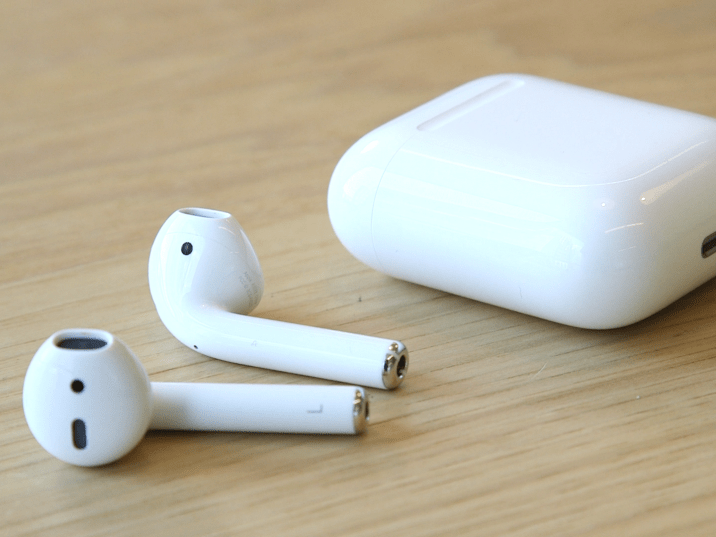
A new category of Wearable technology has emerged in the case of ‘Hearables’ (think Apple AirPods), which are becoming increasingly smarter with Apple’s Airpods soon to be able to respond to Siri in late 2019. According to CCS Insight, shipments of these wireless devices rose from 2 million in 2017 to 6 million in 2018 and a Gartner forecast from November 2018 shows that ear-worn devices are estimated to surpass those of smartwatches by 2022.

Although only 1.4% of wireless headphone owners interacted with voice assistants in 2018, Voice continues to be the next step in the evolution of how people interact with information since it’s more natural than using a keyboard or touchpad, and requires less steps to gather the information. Thus, this number is expected to increase drastically with Google, Amazon, and Microsoft all expected to launch hearable products in the near future to compete against AirPods.

With Jack in the Box having a very distinguishable tone and voice, there is a tremendous opportunity for Jack in the Box to utilize these near wearables to create a connection to the brand.  People will be out and about their day with these hearable devices and be able to ask Siri/Alexa anything, whether it be the time of day or ordering Jack in the Box via Postmates. These headphones will also have the functionality for 3D audio which we can provide the ability to give consumers an expanded listening experience while going about their daily lives.

Damo Academy: 10 Key Trends Shaping Tech In 2019

emerging-tech-trends-in-2018

Damo Academy, a research center for scientific and technological advancement, compiled a list of their top ten emerging trends that are influencing the tech industry leading ahead of 2019 – with a focus on smart-technology, privacy and speed:

 Smart Cities

  • Traffic simulations to accurately combat the growing issue of traffic in major urban cities, where tech algorithms can help cities incorporate smart infrastructure to promote increased mobility.


Speech AI

  • Text-to-Speech tech advancement where AI speech could sound identical to that of a Human voice.


Specialized AI Chips

  • Smart chips to process a mass amount of data at a fast speed to improve performance of devices.


Machine “Common Sense”

  • Speech AI technology incorporated into human interacting machinery, so that machines make rational, human-like decisions


Computing Architectures

  • Developing AI will allow for computing technology to run stronger performance as well as increased energy efficiency with the help of advanced memory devices.


5G Networks

  • Wireless technology is going to become increasingly fast in the next year, boasting 100x the speed of its 4G predecessor.


Digital Identity

  • The rise of wearable and wearable devices is developing a second form of online identification. People are becoming accustomed to a more personalized technological experience which builds trust.


Autonomous Driving

  • Vehicles are on the verge of implementing advanced self-driving technology for personal and public transportation.


 Blockchain Applications

  • With cyber security on the forefront of emerging technological advances, companies will be increasing their use of blockchain applications to ensure all data is secure from outside parties.

 Data-Protection

  • Companies are now taking active measures to make sure all personal information for individuals are protected and safe from invasive data breaches.


The top tech trends of 2019 are mostly centered around the concept of having a faster, more personalized and private experience. Technology is getting smarter to the point where it can almost mimic the experience of a 1:1 human interaction, in part due to the promise of faster and smarter machines.

Previously consumers have been weary of trusting emerging technology out of fear of the unknown. The more human-like a machine is capable of acting, the more it can resonate trust with the consumers. Brands who attach themselves with these technologies who are connecting with consumers also have the potential to show that they are both at the forefront of the tech landscape but also care about a genuine human connection.

Finally, consumers understand that data is “give-and-get”. The more data consumers give, the more they are willing to get from companies. With those of the “giving” comes in the form of personal data, consumers want to make sure they are not being taken advantage of and value companies who make a consistent effort to keep people’s information private and continue to give engaging content.

Facebook could use your family photo to target ads

news-feed1

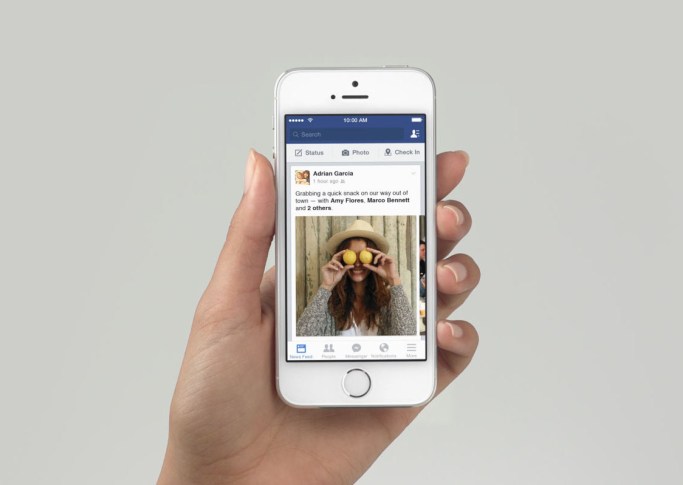
Facebook has filed a patent that would make it easier to target whole families with ads by analyzing the photos they post. The new system covers an algorithm that would identify elements of photographs — like faces or other details— and cross-reference them with other data to build a profile of an entire household. Facebook earlier this year revised their algorithm, so to prioritize what their friends and family share and comment on, while de-emphasizing content from publishers and brands. Followed now by the recent launch of the Portal that included advanced face-tracking features for its “smart camera” which aimed particularly at helping people connect with children or grandchildren. It seems incidentally, that Family is going to become more of a focal point for the network.

Facebook doesn’t go into what “demographic composition” covers, however the description touts a way to hyper-target users based on household size, household member characteristics, shared interests, which household members use which electronic devices, and whether those users are Facebook members. Ultimately, it’s just another way to improve the efficiency of their targeting.

Google-supported AdLingo puts Chatbots inside Interactive Display ads

AdLingo, a Google supported startup is putting chatbots inside display ads where users can type in their questions directly and receive quick responses. The first brands to test this is Allstar Kia dealership and Tophatter, a live auction site. While chatbots are not a new way to communicate with brands, they have mostly lived on the advertiser’s website or within a messaging app, like Facebook Messenger. What differentiates AdLingo’s chatbot is that it lives within a display unit targeted to an in-market shopper with a specific CTA like “Chat now”. The entire experience happens within the same page or app, without any additional steps that require you to leave to another platform/ site. While it’s still too early to tell efficiency of this new unit, Allstar Kia has been able to learn a consumer’s user journey in their car trade-in process through the types of questions that are being asked.

Gartner predicted that by 2020, 85% of business will be conducted without human interaction. Brands consistently find ingenious ways to improve their customer experiences with the assistance of artificial intelligence. Early-adopters such as Sephora makes product recommendations with a chatbot. Starbucks’ artificially intelligent barista takes your order. And as we’ve already learnt from Jack in the Box’s campaign such as the Reddit AMA, people crave transparency, and to feel a direct line of communication. Bringing this experience into the native environment they’re already consuming content is another step in improving the user experience.

Alexa can now detect a cold…and so much more

Amazon Alexa’s will soon be able to tell if someone is sick based on the change in their voice. Its partnership with UK’s National Health Service allows the smart device to diagnose medical symptoms and provide remedial suggestions. Its ability to intake the most minuscule voice changes can tell someone’s emotional states like anger, crying, or boredom. Once the emotional data is received, Alexa can layer it with demographic data to give an appropriate response such as telling a joke or a suggestion of products to order. This new patent will be a bigger improvement in voice detection to what Alexa is already rolling out. The new features, Whisper Mode, changes Alexa’s volume to accommodate to a quiet environment just from intaking the background noise, and Alexa Guard, recognizes safety disrupting sounds such as smoke alarms and glass breaking.

While this patent was recently passed and still needs time to roll out in the marketplace, this advance humanizes AI’s and lessens the gap from a human assistant. Amazon is beginning to pave way to tap into understanding human emotions by saying “If your voice sounds shaky, then you are sad”.

Of course, there will be misunderstood signs and error as the machines learns, but this is truly exciting and groundbreaking, especially as this will add a new layer to sharpen Amazon’s first party data. It’s only a matter of time until Amazon opens the pool to advertisers to take advantage of key behavioral moments. Alexa is already suggesting medicines or recipe for chicken soup, so pharma brands have a space to target those who need a cough drop or cold medicine and have them delivered within the same day through Amazon’s delivery system. But looking further, Amazon’s ability to identify exactly what the user needs based on their emotional triggers will open up endless possibilities for brands to present their products right when they need it.

Person (voice with less energy; around lunch time): What are some food options around here?

Alexa: Are you feeling hungry? Would you like a Buttery Jack from Jack in the Box meal delivered to you?